
Keynote Speakers
Keynote Speaker Ⅰ
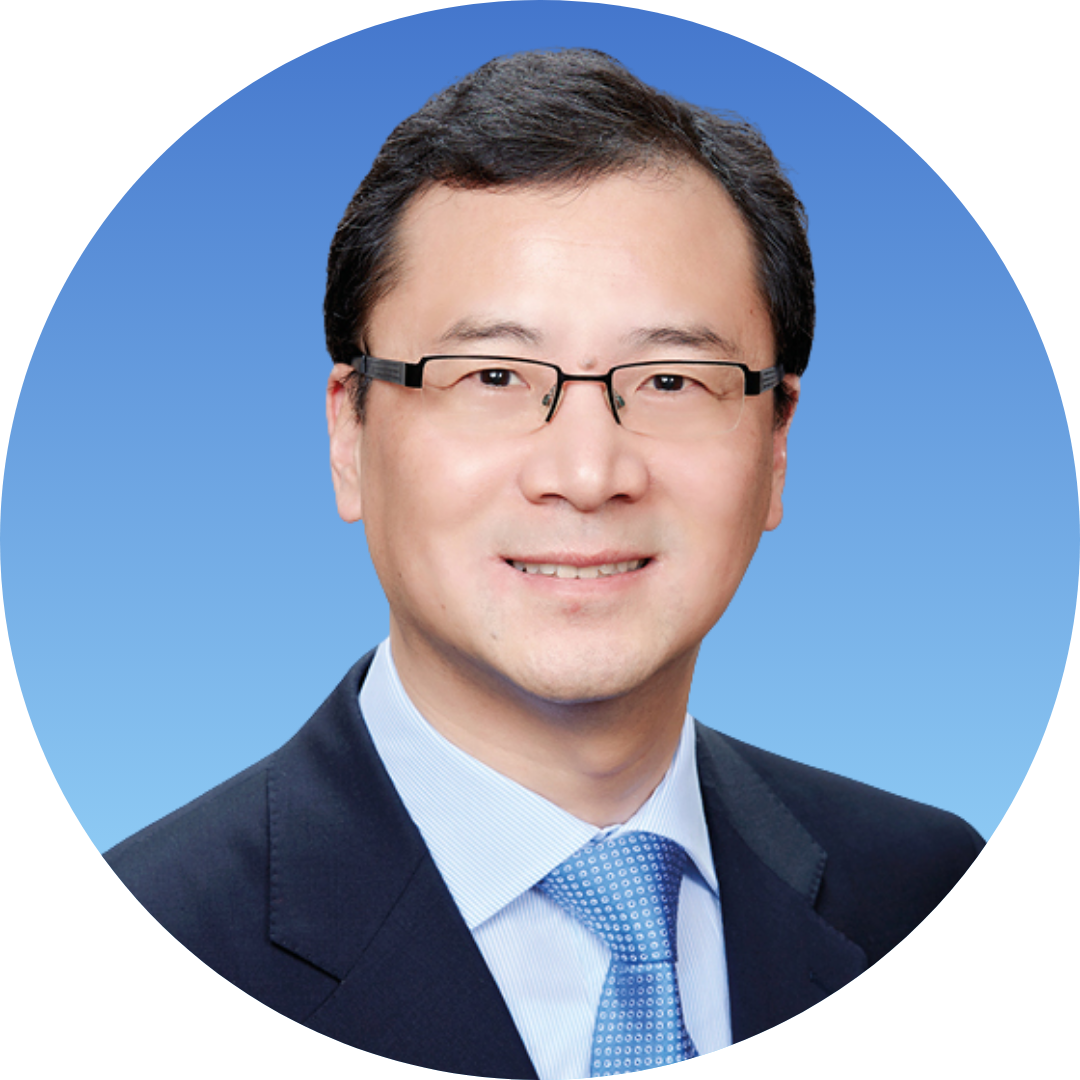
Dan Zhang
The Hong Kong Polytechnic University, China
Brief Introduction: Professor Dan Zhang is a Chair Professor of Intelligent Robotics and Automation, Director of the PolyU-Nanjing Technology and Innovation Research Institute, and Director of the Consortium for Intelligent Robotics Research at the Hong Kong Polytechnic University. He received his PhD in Mechanical Engineering from Laval University, Canada, in 2000. He joined Ontario Tech University (OTU), Canada, as Assistant Professor in 2004 and was promoted to Associate Professor and Professor in 2006 and 2011, respectively. During the appointment period at OTU, he also served as Founding Chair in the Department of Automotive, Mechanical and Manufacturing Engineering (2012 – 2014) and was awarded the Canada Research Chair in Advanced Robotics and Automation (2009 – 2015). Since 2016, he has been at York University, Canada, as a Kaneff Professor and also took up the role of Department Chair in the Department of Mechanical Engineering from 2016 to 2018. Thereafter, he was awarded the Tier 1 York Research Chair in Advanced Robotics and Mechatronics in 2017.
Professor Zhang's research interests include synthesis and optimization of parallel and hybrid mechanisms; generalized parallel mechanisms research; reconfigurable robots; innovation design of parallel robots: parallelization of serial robots; micro/nano manipulation and mems devices (e.g., sensors); rescue robots; smart biomedical instruments (e.g., exoskeleton robots and rehabilitation robotics); AI/robotics/autonomous systems; Aerial and Underwater Robotics; Artificial Intelligence for Robotics; intelligent reconfigurable adaptive landing gear and manipulator (manipulander).
His accomplishments have been recognized by many honors and awards, including Canada Research Chair, Research Excellence Awards, Tier 1 York Research Chair, Lassonde Innovation Awards --- Established Researcher, Early Researcher Award by Ministry of Research and Innovation, Fellow of the Canadian Academy of Engineering (CAE), Fellow of the Engineering Institute of Canada (EIC), Fellow of the American Society of Mechanical Engineers (ASME), and Fellow of the Canadian Society for Mechanical Engineering (CSME).
Speech Title: Research on Embodied Intelligence for Multimodal Aerial Manipulation Robots
Abstract: Driven by the rapid advancements in computer science and artificial intelligence, technology for unmanned aerial vehicles (UAVs) in maritime operations has emerged as a major research hotspot. In recent years, rotary-wing UAVs have been widely adopted in diverse fields—including marine dynamic monitoring, maritime emergency rescue, and naval warfare—owing to their minimal takeoff/landing requirements and exceptional hovering capabilities. However, wave-induced motions subject maritime platforms (e.g., ships) to continuous rocking, significantly escalating the difficulty of UAV landings. To address the operational requirements of rotary-wing UAVs during platform takeoff, landing, and aerial operations at sea, this presentation proposes a design and optimization framework for a dual-mode aerial variable-structure robot based on a generalized parallel mechanism (GPM). Two universal performance indices—terrain adaptability and landing stability—are established to evaluate the landing performance of the adaptive landing gear. Furthermore, a general methodology for constructing a virtual parallel model is formulated to describe the dynamic landing process of the multi-legged landing gear on maritime platforms, alongside an adaptive buffer landing control algorithm. To achieve superior shock absorption, a non-rebound damping parameter search method is developed to determine the optimal system damping based on the instantaneous landing state of the landing gear. Finally, an adaptive buffer landing control system is established on the optimized 4-DOF variable-structure robot, and prototype experiments are conducted to validate the effectiveness of the proposed control strategy and the advantages of the non-rebound damping parameters.
Keynote Speaker Ⅱ
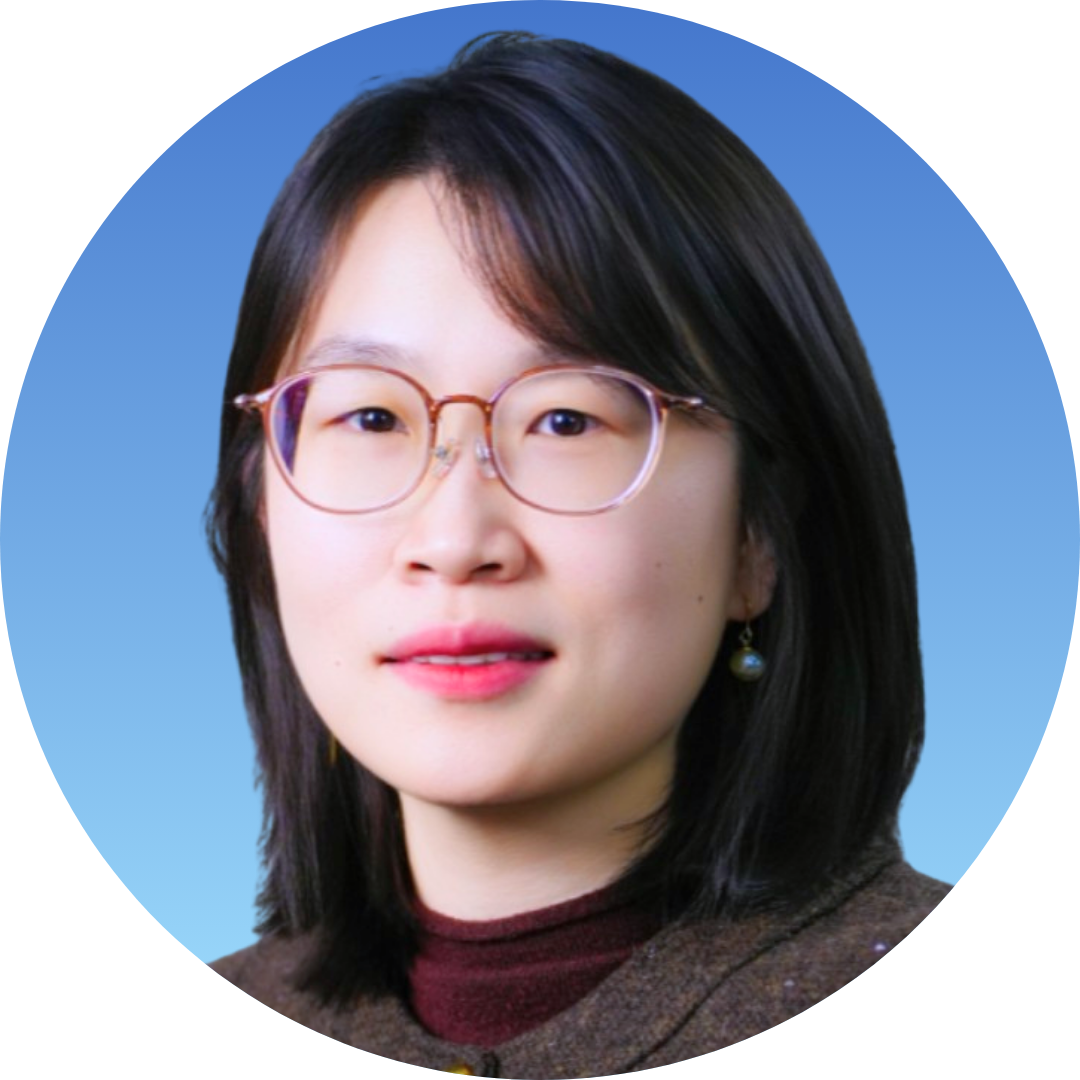
Zhimin Chen
Shanghai DianJi University, China
Brief Introduction: Chen Zhimin, Professor and Doctoral Supervisor, Shanghai Rising-Star Scholar.
Senior Member of the China Institute of Electronics (CIE), Member of the China Computer Federation (CCF), and Communications Committee Member of CCF YOCSEF Shanghai Chapter.
Her research interests include high-precision positioning and direction finding, and radar technology.
She has presided over more than 10 vertical research projects, including the Young Scientists Fund and General Program of the National Natural Science Foundation of China, the Domain Fund of the Equipment Development Department of the Central Military Commission, the Natural Science Foundation of Shanghai, the AI Special Project of Shanghai Municipal Education Commission, and open projects of national defense key laboratories and full-weight laboratories.
She has published over 50 papers in top journals of the field such as IEEE TSP, TVT, and TITS, with more than 2000 total citations.
Speech Title: Low-Cost Anti-Jamming Technologies for UAVs
Abstract: Adaptive Beamforming technology is one of the key technologies in the field of radar array signal processing. It realizes beam direction by adjusting the weight of each antenna to enhance the signal-to-noise ratio and suppress interference. Existing algorithms, such as the MVDR algorithm, are very sensitive to the mismatch of the desired signal steering vector due to angular errors, array structures, and local scattering. Especially when the desired signal exists in the received signal, the performance of the algorithm will significantly decrease.
How to achieve highly robust and high-performance adaptive beamforming is currently a hot and difficult research topic.
An expected signal removal method is proposed. By constructing a projection matrix, the desired signal is well separated from the received signal, which improves the accuracy of subsequent interference-noise covariance matrix reconstruction.
An interference-noise covariance matrix reconstruction method based on Gauss-Legendre series is proposed. For the problem of complex calculations in the integration step during reconstruction, the third-order Gauss-Legendre series is used, which greatly reduces the complexity of reconstruction and improves the accuracy of reconstruction.
A binary quadratic constraint problem based on the maximum output SINR criterion is constructed to complete the correction of the desired signal steering vector and improve the robustness of the algorithm.
The proposed algorithm has good performance in simulation and also shows good robustness in actual testing.
Keynote Speaker Ⅲ

Tarek Hamel
Université Côte d'Azur, France
IEEE Fellow
Brief Introduction: Tarek HAMEL has been a Professor at Université Côte d'Azur since 2003. He received his Ph.D. in Robotics from the University of Technology of Compiègne (UTC), France, in 1996. After two years as a research assistant at UTC, he joined the Centre d'Études de Mécanique d'Île-de-France in 1997 as an Associate Professor.
His research interests encompass nonlinear control theory, estimation, and vision-based control, with a particular focus on applications to unmanned robotic systems.
Prof. HAMEL is an IEEE Fellow and a Senior Member of the Institut Universitaire de France. He has served as an Associate Editor for IEEE Transactions on Robotics, IEEE Transactions on Control Systems Technology, and Control Engineering Practice.
Speech Title: Unified Control Approach Design for Aerial Vehicles
Abstract: Airplanes, helicopters and other Vertical Take-Off and Landing (VTOL) vehicles, blimps, rockets, hydroplanes, marine ships, and submarines are generally underactuated. They are essentially composed of a rigid body immersed in a fluid medium (air or water). They are commonly controlled via a propulsive thrust force directed along a privileged body-fixed axis and a torque vector with one (in the case of a marine ship) or two or three (in the case of airships and submarines) independent components responsible for modifying the body's orientation in a 2D plane or in 3D space. These vehicles are underactuated because, apart from the direction associated with the thrust force, the other directions of displacement are not directly actuated. Yet, until recently, the structural similarity between these vehicles had not been exploited to develop a general control framework.
In this talk, I will provide some insights into this direction by proposing a unified control strategy that incorporates aerodynamic (resp. hydrodynamic) forces into the control design for a large class of aerial (resp. underwater) vehicles, including VTOL vehicles, rockets, airplanes, and convertible vehicles.
Keynote Speaker Ⅳ
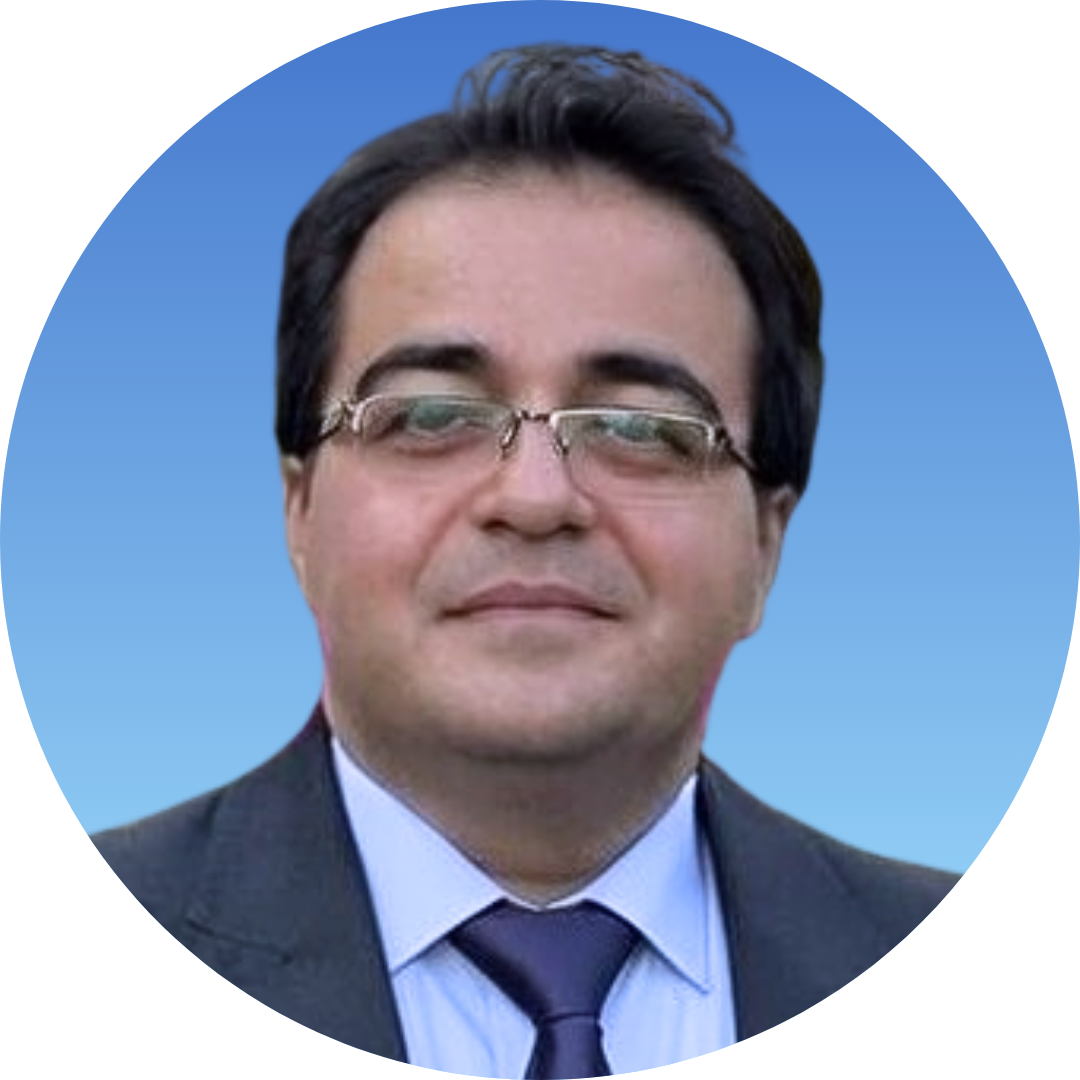
Mo, Sa-Li
Sunway University, Malaysia & National Yunlin University of Science and Technology, Taiwan
Brief Introduction: Professor Mo, Sa-Li is a Distinguished Professor of Control Engineering at Sunway University and the National Yunlin University of Science and Technology. He also holds adjunct professor appointments at several international institutions, including EIT (Australia), Khazar University, Ho Chi Minh City University of Technology, and University of Zanjan. He is an internationally recognized researcher in control systems, robotics, artificial intelligence, autonomous systems, and nonlinear dynamical systems. His research focuses on advanced control theory and its applications to robotic systems, autonomous vehicles, aerospace systems, mechatronics, and intelligent engineering systems. His work encompasses robust control, adaptive control, sliding mode control, learning-based control, fault-tolerant control, optimization, and AI-assisted control methodologies. He is recognized among the world's top 2% scientists by Stanford University and has been listed among leading researchers in Electronics and Electrical Engineering since 2019. He has authored over 400 journal and conference publications, with more than 12,500 citations and an h-index exceeding 63 (https://goo.gl/SQiSsP). He serves on the editorial boards of several prestigious international journals. He has supervised more than 60 master's students and 15 Ph.D. candidates.
Speech Title: Finite Time Control of Unmanned Aerial Systems
Abstract: This talk presents recent advances in finite-time control for unmanned aerial systems, with particular emphasis on quadrotor platforms operating under parameter uncertainties, actuator faults, and external disturbances. The central challenge addressed is guaranteeing convergence of tracking errors within a bounded time—a critical requirement for safety-critical UAV missions where asymptotic stability alone is insufficient. To tackle this, the research develops adaptive fault-tolerant control frameworks that integrate terminal sliding mode reaching laws with nonlinear disturbance observers. The terminal sliding mode strategy ensures finite-time stabilization of tracking errors, while the disturbance observer provides accurate estimation of lumped uncertainties to preserve tracking accuracy. A key contribution is the design of adaptive mechanisms that compensate for actuator faults without requiring prior knowledge of fault magnitude. The proposed methodologies are validated through Lyapunov-based stability analysis, high-fidelity simulations, and hardware-in-the-loop implementations, with comparative studies demonstrating superior convergence rates and robustness against existing techniques. The talk concludes by discussing practical implications for autonomous flight and future directions in finite-time control of multi-UAV systems.
Keynote Speaker Ⅴ
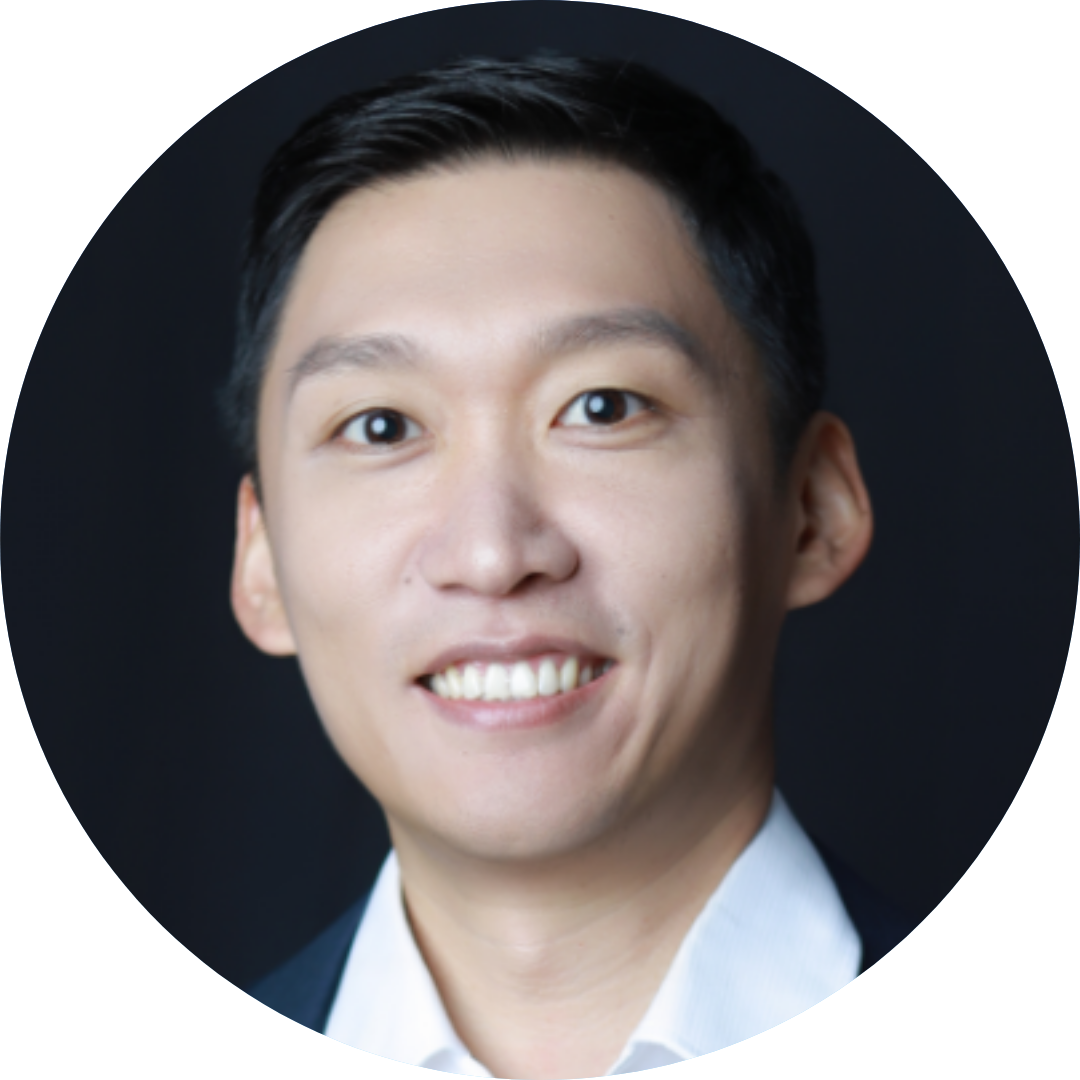
Liang Wang
Tsinghua University, China
Brief Introduction: Dr. Wang Liang is a Professor at the School of Aerospace Engineering, Tsinghua University, and concurrently serves as Deputy Director of the Institute of Aeronautical Electric Propulsion, Tsinghua Sichuan Energy Internet Research Institute. He received his Bachelor of Engineering and Doctoral degrees from Tsinghua University in 2003 and 2008 respectively. From 2008 to 2011, he worked as a postdoctoral researcher at the Institute of Fluid Mechanics and Acoustics, Technische Universität Berlin, Germany.
He has been teaching at the School of Aerospace Engineering, Tsinghua University since 2012, and was a visiting scholar in the Department of Mechanical and Aerospace Engineering, Princeton University, USA from 2016 to 2017. His research has long focused on the development and review of advanced fixed-wing/rotary-wing aircraft, distributed electric propulsion systems and ground-effect craft. He presides over multiple national key projects on low-altitude emergency equipment and aeronautical engineering, and possesses extensive experience in aircraft technical scheme evaluation and equipment procurement demonstration.
Speech Title: Anti-UAV System: Technical Route of Countering UAVs with UAVs and Challenges of Multiple Countermeasure Methods
Abstract: With the rapid growth of the low-altitude economy and wide adoption of civilian unmanned aerial vehicles (UAVs), low-slow-small UAVs bring severe low-altitude security risks such as unauthorized intrusion and illegal flights. Current anti-UAV protection systems adopt multiple technical approaches, including radar and optical detection, radio frequency monitoring and jamming, navigation deception, and **Countering UAVs with UAVs**. Among them, **Countering UAVs with UAVs**, as an innovative active confrontation paradigm, shows unique advantages in closerange disposal of swarm targets. This paper systematically reviews the complete technical framework of anti-UAV systems. It introduces the principles and characteristics of conventional detection and countermeasure methods such as radar, optoelectronics, radio frequency and deception. Special emphasis is placed on core technologies of Countering UAVs with UAVs, including swarm coordination, airborne perception and short-range interception. Facing scenarios such as complex urban clutter, ultra-low-altitude stealth targets and coordinated swarm penetration, this paper compares the application scope and engineering limitations of different technical approaches. It analyzes bottlenecks and practical challenges of the Countering UAVs with UAVs solution in coordination latency, multi-target game and environmental adaptability. The development trend of integrated low-altitude security systems with multi-method fusion and distributed collaboration is prospected. This work provides references for the construction of anti-UAV equipment systems.